

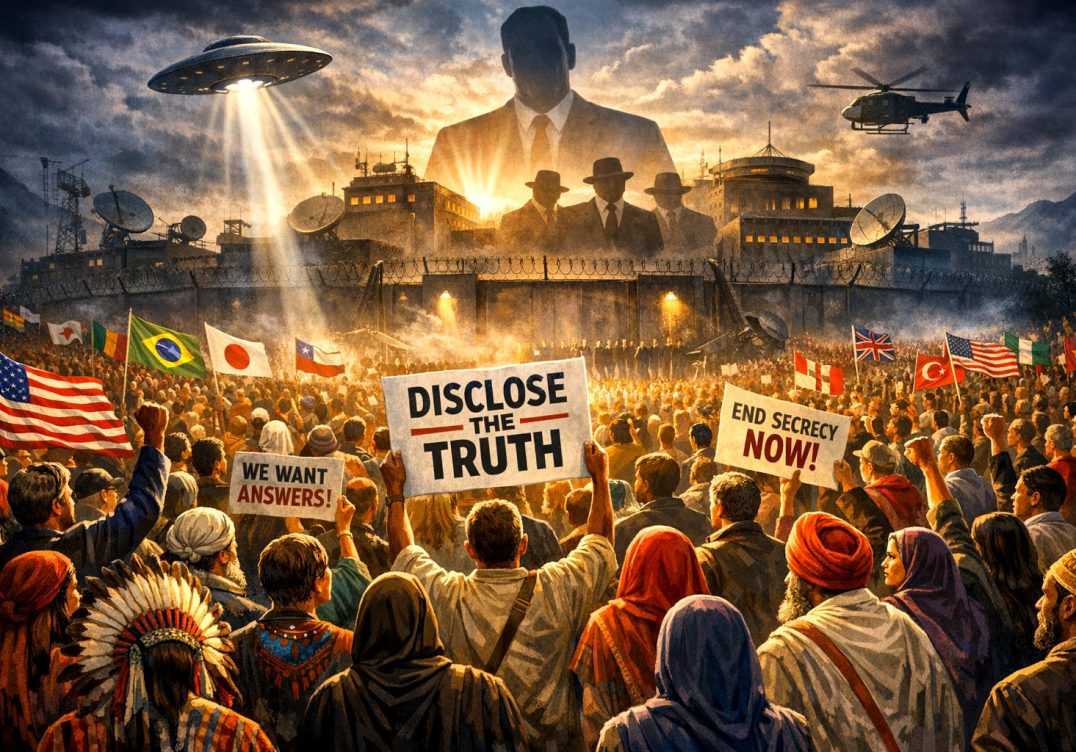
In a recent appearance on Andrew McGrillen’s That UFO Podcast, constitutional attorney and New Paradigm Institute president Daniel Sheehan outlined a rapidly shifting landscape surrounding UAP secrecy, congressional authority, and the growing pressure for transparency. His perspective — shaped by decades of legal work involving national‑security cases — suggests that the United States is entering a historically unprecedented moment in the disclosure timeline.
A Post‑2017 Turning Point
Sheehan argues that the cultural and political environment surrounding UFOs fundamentally changed after 2017, when mainstream media outlets and the Pentagon publicly acknowledged military encounters with unidentified aerial phenomena.
According to Sheehan, this shift:
- legitimized the topic within national‑security circles
- emboldened lawmakers to ask questions previously considered off‑limits
- created a public expectation of transparency that institutions can no longer ignore
He describes the current moment as a “new baseline” — one where secrecy is increasingly difficult to maintain.
Congress Already Has the Power — If It Chooses to Use It
A central theme of Sheehan’s interview is the constitutional authority of Congress. He emphasizes that lawmakers do not require executive‑branch permission to declassify information related to UAP programs.
Sheehan outlines several mechanisms already available to Congress:
- subpoena power
- compelled testimony
- legislative mandates
- public‑interest declassification authority
The tools exist. The challenge, he argues, is political will, not legal limitation.
Why the Strongest Disclosure Legislation Was Weakened
The Senate’s ambitious UAP disclosure language — which included provisions for controlled release of legacy materials and oversight of special access programs — was significantly weakened in the final version of the National Defense Authorization Act.
Sheehan attributes this to:
- entrenched national‑security interests
- pressure from classified program managers
- concerns about destabilizing long‑running covert initiatives
He frames the rollback as evidence of a deep institutional resistance that remains powerful, but no longer unchallenged.
The National Security State and the Culture of Silence
Sheehan provides historical context for how secrecy structures evolved after World War II, describing a system designed to compartmentalize information and discourage congressional interference.
He characterizes this system as:
- hierarchical
- intimidation‑based
- resistant to oversight
- self‑protective
Yet he notes that the old model is beginning to fracture under the weight of whistleblower testimony and public scrutiny.
Whistleblowers Are Reshaping the Landscape
New legal protections have enabled insiders to come forward with unprecedented detail. Sheehan believes these whistleblowers — many of whom have testified to Congress behind closed doors — are creating systemic pressure that institutions can no longer contain.
Their accounts, he says, are forcing lawmakers to confront the possibility of long‑running programs operating outside traditional oversight channels.
A Deathbed Encounter That Humanizes the Mystery
One of the most striking moments in the interview is Sheehan’s retelling of a deathbed confession from an individual who claimed a direct encounter with a non‑human entity.
The witness described:
- the being’s appearance
- the emotional impact of the encounter
- the lifelong burden of secrecy
Sheehan presents the account not as proof, but as a historically significant data point — a reminder that behind every classified program are human beings carrying experiences they were never allowed to share.
Ethical and Philosophical Stakes
Throughout the conversation, Sheehan returns to the moral dimensions of secrecy.
He raises questions about:
- the psychological toll on experiencers
- the public’s right to know
- the balance between national security and scientific progress
- the responsibility of institutions to act transparently
These themes resonate strongly with MUFON’s mission of civilian‑led investigation and documentation.
Why This Moment Matters
Sheehan concludes that meaningful disclosure will not come from government benevolence, but from public mobilization. He sees a convergence of forces — credible witnesses, bipartisan interest, media normalization, and citizen engagement — that makes the current era unlike any previous chapter in the UFO narrative.
For researchers, investigators, and experiencers, this moment represents a rare alignment of opportunity and momentum.
Why This Matters to MUFON Readers
- Congressional authority is stronger than commonly understood, meaning legislative action remains a viable path to transparency.
- Whistleblower protections are working, and more testimony is likely to surface.
- Public pressure is now a decisive factor, reinforcing the importance of civilian reporting and documentation.
- Experiencer testimony remains central, not peripheral, to understanding the phenomenon.
MUFON’s role — collecting data, preserving witness accounts, and maintaining public engagement — is more vital than ever.
Source
That UFO Podcast – Andrew McGrillen Interview with Daniel Sheehan
(Referenced for factual extraction; this article is an original synthesis.)


Comments