

Telepathy is a Natural Phenomenon © 2025 by Emory Taylor and Rajan Iyer is licensed under Creative Commons Attribution-NonCommercial-NoDerivatives 4.0 International. To view a copy of this license, visit:
https://creativecommons.org/licenses/by-nc-nd/4.0/.
Generated Summary & Key Concepts – Click Here
I. Introduction
Einstein (1879 – 1955) was a theoretical physicist and Nobel Laurate [1,2]. He believed in a physical reality that existed outside of humans, an external physical reality, saying “The belief in an external world independent of the perceiving subject is the basis of all natural science” [3]. He developed relativity, which has two parts: special relativity (SR), which he authored in 1905, and general relativity (GR), which he authored in 1915 [4,5]. SR includes time dilation and length contraction as real, not apparent, and includes flat spacetime [4,6]. GR is about gravity as a curvature of spacetime [5,6]. Einstein’s relativity requires the continuum concept, which has the property of infinite divisibility [6]. According to Einstein, relativity underlies external physical reality [7,8]. This means external physical reality requires the continuum concept that has the property of infinite divisibility. Separability is a property of external physical reality, meaning there are distinct objects and locations that humans can detect through sense perception, such as touch or sight. Starting in 1900 and going through 1930, a quantum theory (also called quantum mechanics) emerged and was developed [9]. This led to theoretical physics not having a unified foundation for the treatment of all phenomena [7]. There was a general relativistic theory for macroscopic phenomena and a quantum theory for microscopic phenomena, such as atomic and quantum phenomena [7]. In 1935, Einstein and Nathan Rosen attempted to use the method of general relativity to account for atomic and quantum phenomena, but they were unsuccessful [7].
To the end of his life, Einstein rejected quantum mechanics as a fundamental theory, believing it to be an incomplete theory [10]. Approximately a year before his death in 1955, Einstein, in 1954, wrote three letters in which he speculated that physics cannot be a continuum physics and must be a discontinuum physics for which the continuum concept, along with space and time and differential quotients, must be discarded (tossed out) as being fundamental, but he did not know how to proceed with such a theory [11]. Einstein was saying (1) that relativity (both SR and GR) is not fundamental and must be replaced with a discontinuum physics, which means time dilation and length contraction must be shown to be apparent, not real, spacetime must be replaced, and curvature of the replacement for spacetime must be the replacement for gravity, and (2) external physical reality cannot be fundamental and must be replaced with a discontinuum based reality. Then, approximately six months after having written the third letter of 1954, and without knowing how to proceed with such a discontinuum physics, Einstein died on 18 April 1955 [10,11]. Approximately sixty-six years after Einstein’s death, starting in 2021 and going through 2025, twelve papers were published, in the peer reviewed journal Physics Essays, to establish the conceptual foundations of a discontinuum physics (DCP) that is based on the three letters Einstein wrote in 1954 [12-23]. The twelve conceptual DCP (C-DCP) papers can be read for free at discontinuumphysics.com or purchased from Physicsessays.org.
II. Replacing the External Physical Reality and Elements of SR and GR
In establishing the conceptual foundations of DCP, in C-DCP papers 1 – 4, (1) time dilation and length contraction were shown to be apparent, not real, and (2) spacetime was replaced by a discontinuous energy fields field (DEF-field), with DEF-field pronounced as deaf-field, which is two different energy fields that are (a) discontinuous by way of being part-of each other, and (b) inseparable, meaning one of these energy fields cannot exist without the other energy field also existing, and one of these energy fields cannot cease to exist without the other energy field also ceasing to exist, and (3) gravity is a curvature of the DEF-field, and (4) the existence of an external physical reality as the basis of all natural science was replaced by the discover of five realities [12-15]. Getting the DEF-field, which is the replacement for spacetime, required using the Einstein – Rosen concept of a continuous field, Einstein’s mass – energy relation, Einstein’s conservation of mass – energy law, and the balanced energy ledger method [7,13,24]. This method of replacing spacetime requires the use of an unlimited disembodied energy (UDE), a type of vacuum energy state with a zero net total energy [13]. The two different and inseparable energy fields that are part-of each other as the components of the DEF-field (1) come into existence from a quantum fluctuation of the UDE, and (2) are (a) energy embodied in matter, called an embodied-energy-discontinuous-field (EED-field), which is a physical energy field, and (b) energy not embodied in matter, called a disembodied-energy-discontinuous-field (DED-field), which is a nonphysical energy field [13,14].
III. Inseparability
Everything that exists is either (1) an EED-field that is part-of one DED-field, which means all of the EED-fields are part-of each other as one EED-field by way of being part-of one DED-field, or (2) a DED-field that is part-of the one EED-field, which means all of the DED-fields are part-of each other as one DED-field by way of being part of the one EED-field [14,15]. The one DED-field and the one EED-field that are part-of each other are the components of the DEF-field [13,14]. Since everything that exists is either part of the one EED-field or part-of the one DED-field, and since the one EED-field and the one DED-field are part-of each other, there are no separate things, which means the dominate property of the DEF-field is inseparability [19].
IV. The Five Realities with Two Inseparable Realities
The five realities that were discovered while establishing the conceptual foundations of DCP are (1) mathematical reality, which is not fundamental, (2) no-reality, which is fundamental and represented by the UDE (the unlimited disembodied energy), (3) no-continuum reality (nonphysical reality), which is represented by the one DED-field (the disembodied-energy-discontinuous-field) and is not fundamental if used without the one EED-field, (4) continuum reality (physical reality), which is represented by the one EED-field (the embodied-energy-discontinuous-field) and is not fundamental if used without the one DED-field, and (5) discontinuum reality (quantized reality), which is fundamental and represented by (a) limited no-continuum reality (a form of nonphysical reality), which is the one DED-field (the disembodied-energy-discontinuous-field) used as part-of the one EED-field, and (b) limited continuum reality (a form of physical reality), which is represented by the one EED-field (the embodied-energy-discontinuous-field) used as part-of the one DED-field [14,15]. Since the one DED-field and the one EED-field are inseparable, and since the one DED-field represents no-continuum reality (nonphysical reality), and since the one EED-field represents continuum reality (physical reality), it logically follows that no-continuum reality (nonphysical reality) as a fundamental reality, which means it is part-of continuum reality (physical reality), and continuum reality (physical reality) as a fundamental reality, which means it is part-of no-continuum reality (nonphysical reality), are inseparable realities [14,15].
V. Table of Realities (TOR)
In C-DCP paper 4, the five realities are arranged into a table of realities (TOR) [15]. TOR is pronounced as the name Tor. The twelve C-DCP papers are divided up into three groups of four papers, and each of the three groups culminates in a version of TOR [12-23]. The original TOR, which is version one of TOR, is in group one (C-DCP papers 1 – 4) [12-15]. The first update to TOR, which is version two of TOR, is in group two (C-DCP papers 5 – 8) [16-19]. The second update to TOR, which is version three of TOR, is in group three (C-DCP papers 9 – 12) [20-23]. The five realities are arranged into TOR (aka table of realities) for making predictions [15,19,23].
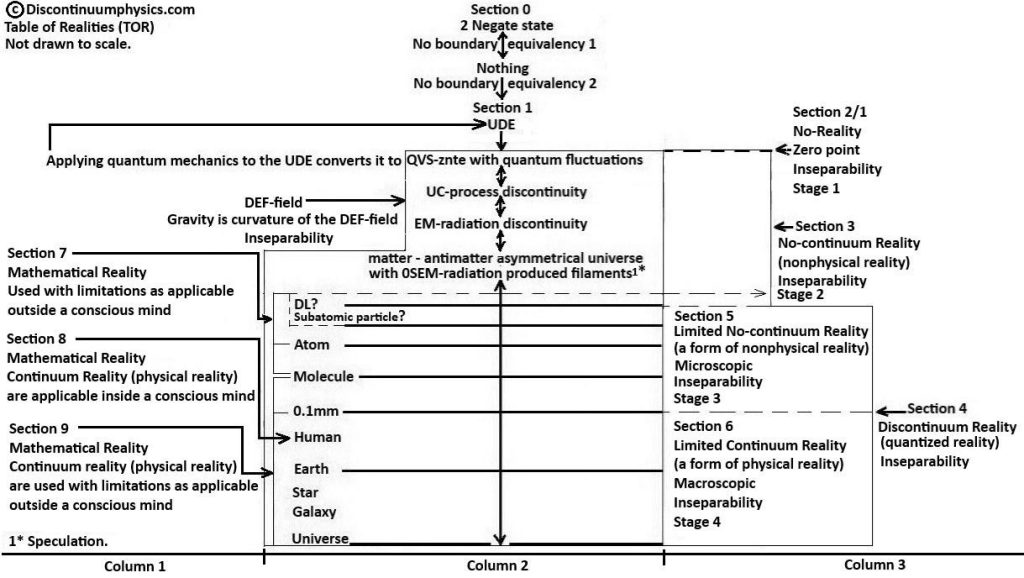
FIG 1: The second update to TOR, given in C-DCP paper 12 [23].
To get TOR, there must be two locations because two of the realities are based on the continuum concept and have been falsified as being fundamental realities, which are mathematical reality and continuum reality (physical reality) used without no-continuum reality (nonphysical reality), and the other three realities are not based on the continuum concept and are fundamental realities [14,15]. Whether by evolution or creation, the human species arrived at a position of survival proficiency, which includes being able to find food and water. This position of survival proficiency involves detecting continuum reality (physical reality) without no-continuum reality (nonphysical reality) by means of sense perception (sight, smell, hearing, taste, touch). The position of survival proficiency by using sense perception to detect continuum reality (physical reality) without no-continuum reality (nonphysical reality) can be referred to as the 2SPCR position, where 2SP stands for survival proficiency by sense perception and CR stands for continuum reality (physical reality) without no-continuum reality (nonphysical reality). For a human capable of sight, when the human looks around, whether inside a building in a room or outside of the building, in the outdoors, the human is looking directly at continuum reality (physical reality) without no-continuum reality (nonphysical reality). Having arrived at the 2SPCR position, there was no reason for the human species to evolve or be created beyond the 2SPCR position. Whether the process was evolution or the process was creation, the process, as of 2025, ended at the same place: continuum reality (physical reality) without no-continuum reality (nonphysical reality). It is a real reality, but it is not a fundamental reality because (1) it is based on the continuum concept instead of the discontinuum concept, and (2) it is used without no-continuum reality (nonphysical reality) [15]. A human has a brain, which is a physical thing, and the human has a conscious mind, which is a nonphysical thing that resides inside the human’s brain. Using inside the conscious mind and outside the conscious mind as two locations, the five realities can be arranged into TOR, which can be used to make predictions [15].
TOR is divided up into three columns (see the bottom of Fig 1) [15,19,23]. At the top of Column 2 and moving down to “matter – antimatter asymmetrical universe with OSEM-radiation produced filaments” there is the list for how M-nature, which is nature considered metaphorically from C-DCP paper 12, brought the universe into existence [23]. Column 2 lists entities to which realities are applicable, such as UDE, subatomic particles, a human, and a galaxy (see Column 2 of Fig 1) 15,19,23]. Column 1 contains the two realities that are not fundamental (see Column 1 of Fig 1) [15,19,23]. Column 3 contains the three realities that are fundamental (see Column 3 of Fig 1) [15,19,23]. TOR is also divided up into sections [15,19.23]. Section 0 and Section 1 appear at the top of Column 2 [23]. These sections (1) involve the UDE coming into existence from the 2 negate state, and (2) involve quantum mechanics being applied to the UDE, changing it into the quantum vacuum state with a zero net total energy (QVS-znte), and (3) involve a quantum fluctuation of the QVS-znte constituting a discontinuity, and (4) involve the discontinuity being conserved as an electromagnetic radiation (EM radiation) discontinuity, and (5) involve the universe coming from the conserved discontinuity (see top of Column 2 of Fig 1) [23]. Section 2/1 and Sections 3 – 6 appear in Column 3, they include the three fundamental realities of no-reality, no-continuum reality (nonphysical reality) used with continuum reality (physical reality), and discontinuum reality (quantized reality) (see Column 3 of Fig 1) [23]. Sections 7 – 9 appear in Column 1, they include the two realities that are not fundamental, which are mathematical reality and continuum reality (physical reality) used without no-continuum reality (nonphysical reality) (see Column 1 of Fig 1) [23].
Note that TOR has two directions: going down from the top of Column 2 there is an increase in the size of the entities to which the realities are applicable, and going up from the bottom of Column 2 there is a decrease in the size of the entities to which the realities are applicable (see Column 2 of Fig 1) [15,19,23]. Going down TOR, the limited continuum reality (a form of physical reality) component of discontinuum reality (quantized reality) becomes dominate, and, going up TOR, the limited no-continuum reality (a form of nonphysical reality) component of discontinuum reality (quantized reality) becomes dominate [15,19,23]. In Column 2, the 0.1mm is arbitrarily chosen as the divider separating the microscopic realm and macroscopic realm (see Column 2 of Fig 1) [15,19,23]. Note that at the DL (discontinuum length, which is not currently known), the limited no-continuum reality (a form of nonphysical reality) component of discontinuum reality (quantized reality) is so dominate that, in Section 3, it is referred to as just no-continuum reality (nonphysical reality), but strictly speaking it is not separate from continuum reality (physical reality), remember, these two realities are inseparable realities and must be used as such to be fundamental realities.
VI. A Human is a Multi-reality Organism
Using TOR, it can be demonstrated that a human with a conscious mind is a multi-reality organism to which all five realities are applicable (see Fig. 2) [15,19,23]. Looking at TOR in Fig 1, find the Human listed in Column 2. Use Column 1 and Column 3 of Fig 1 to list the realities applicable to the Human that are not limited use realities. This gives mathematical reality and continuum reality (physical reality) used without no-continuum reality (nonphysical reality), which means it is not fundamental, from Section 8 of Column 1 (see Fig 1), and it gives discontinuum reality (quantized reality), with its limited continuum reality (a form of physical reality) component being dominate, from Sections 4 and 6 of Column 3 (see Fig 1). Mathematical reality and continuum reality (physical reality) without no-continuum reality (nonphysical reality), which means it is not fundamental, from Section 8 of Column 1 of Fig 1 are applicable inside a conscious mind that resides inside the Human’s brain, see Fig 2 for the top of Column1. Discontinuum reality (quantized reality), with its limited continuum reality (a form of physical reality) component being dominate, from Sections 4 and 6 of Column 3 of Fig 1 is applicable to the whole Human, see Fig 2 for the middle of Column 3. Looking at TOR in Fig 1, find the Atom listed in Column 2. Use Column 3 of Fig 1 to list the realities applicable to the Atom. This gives discontinuum reality (quantized reality), with its limited no-continuum reality (a form of nonphysical reality) component being dominate, from Sections 5 and 6 of Column 3 of Fig 1, is applicable to the Atom, see Fig 2 for the middle of Column 1. Looking at TOR in Fig 1, find the Subatomic particle listed in Column 2. The exact location of the Subatomic particle is not currently known because the length of the DL (the discontinuum length) is not currently known. The location of the Subatomic particle is close enough to the DL that no-continuum reality (nonphysical reality) from Section 3 of Column 3 of Fig 1 can be used as applicable to the Subatomic particle, see Fig 1 and Fig 2 for the bottom of Column 1.
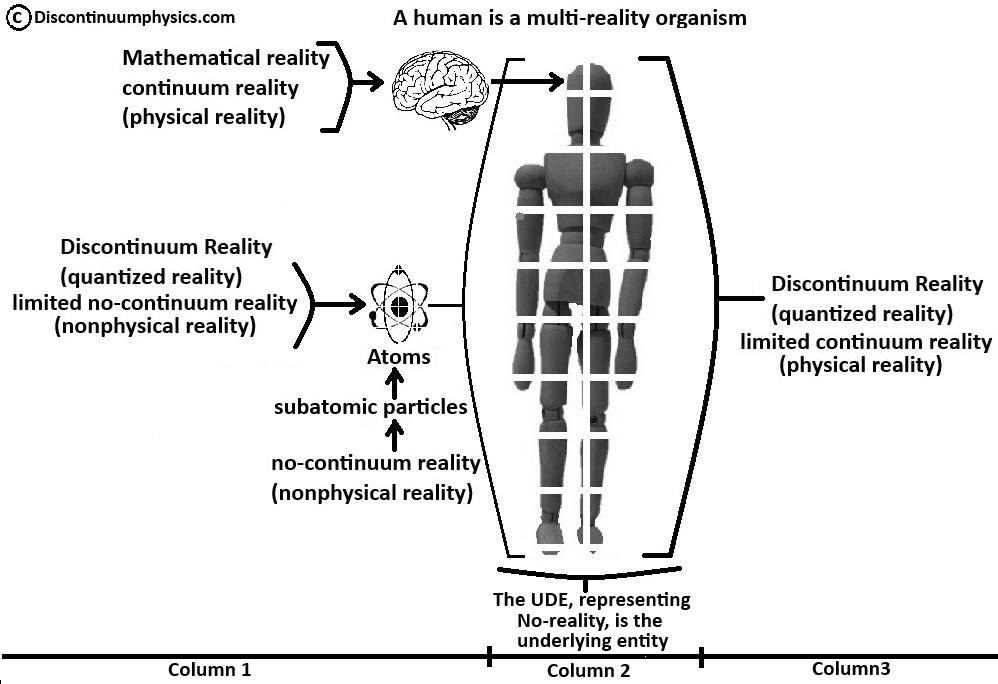
FIG 2: TOR can be used to demonstrate that a human is a multi-reality organism.
Because everything that exists is part-of the DEF-field, and because the DEF-field has the two components of the EED-field, which is a physical field, and the DED-field, which is a nonphysical field, the gray color of the Human in Fig 2 represents the EED-field, which is the physical field, and the white color of Fig 2 represents the DED-field, which is the nonphysical field, see Fig 2. Because the EED-field and the DED-field came from the UDE, the UDE is the underlying entity, see Fig 2 for Column 2. By following the instructions in this paragraph and the paragraph above it, it is demonstrated that Fig 2 illustrates a Human is a multi-reality organism to which all five of the realities are applicable. In Section 8 of TOR (see Fig 1) and the top of Column 1 of Fig 2, continuum reality (physical reality) without no-continuum reality (nonphysical reality), which means it is not fundamental, is what Einstein was unknowingly referring to when he used the term external physical reality, which means it is not external, as it only occurs (aka exists) inside a conscious mind, not outside of a conscious mind.
VII. Controlling the Five Realities
For a human with a conscious mind to be in the 2SPCR position (the position of survival proficiency by using sense perception to detect continuum reality (physical reality) without no-continuum reality (nonphysical reality), which means it is not fundamental, as previously referred to in Section VI.), while the human is awake, the human’s conscious mind keeps control over the five realities so that the human senses are experiencing continuum reality (physical reality) without no-continuum reality (nonphysical reality), which means it is not fundamental. In essence, the human’s conscious mind, by keeping control over the five realities, is protecting the human, ensuring the human is in the 2SPCR position, so the human can find food and water, so the human is proficient at survival. The talent is that a human’s conscious mind keeps strict control over the five realities so that the human is in the 2SPCR position. “This talent suggests that, if telepathy requires a reality other than continuum reality (physical reality) [without no-continuum reality (nonphysical reality), which means it is not fundamental], it will be difficult for a human to experience telepathy, which means it will be difficult to experimentally detect telepathy” [25].
VIII. Telepathy
On 20 October 2025 the thirteenth C-DCP paper, “Conceptual foundations of telepathy as a natural phenomenon”, was accepted for publication in Physics Essays [25]. It explained that according to C-DCP (conceptual DCP) the definition of telepathy, as “The transfer of information between individuals by means other than the known senses”, is expressed from the point of view of two different realities [25,26]. Separability is required for “The transfer of information between individuals”, which means the first part of the definition of telepathy is based on continuum reality (physical reality) without no-continuum reality (nonphysical reality), which means it is not fundamental and only applicable inside a conscious mind [25]. Since the second part of the definition of telepathy requires something other than the known senses, it cannot be based on the continuum reality (physical reality) without no-continuum reality (nonphysical reality) that is not fundamental and only applicable inside a conscious mind [25]. This is because the 2SPCR position, from Sections V. and VII., requires sense detection of continuum reality (physical reality) without no-continuum reality (nonphysical reality) that is not fundamental and only applicable inside a conscious mind, which can only occur because of the “talent” from Section VII — the human conscious mind is stripping away the realities that are fundamental and applicable outside the conscious mind, which it does to protect the human, to keep the human in the 2SRCR position so the human can find food and water. Since (1) continuum reality (physical reality) and no-continuum reality (nonphysical reality) are inseparable realities (see Section IV.), which means when one of these realities exists the other one also exists, and (2) the existence of the continuum reality (physical reality) without no-continuum reality (nonphysical reality) that is not fundamental and applicable inside a conscious mind is required for the first part of the definition of telepathy, and (3) the second part of the definition of telepathy cannot be based on the continuum reality (physical reality) without no-continuum reality (nonphysical reality) that is not fundamental and applicable inside a conscious mind, it logically follows that the second part of the definition of telepathy must be based on no-continuum reality (nonphysical reality) from Section 3 of TOR in Fig 1.
Fig 3 depicts the “individuals” from the definition of telepathy [25]. They are Person 1 on earth and Person 2 on an exoplanet five light years away from the earth, which is expressed from the point of view of the continuum reality (physical reality) without no-continuum reality (nonphysical reality) that is not fundamental and applicable inside a conscious mind [25]. Person 1 and Person 2 are both made of atoms that are made of subatomic particles, which is expressed from the point of view of the continuum reality (physical reality) without no-continuum reality (nonphysical reality) that is not fundamental and applicable inside a conscious mind [25].
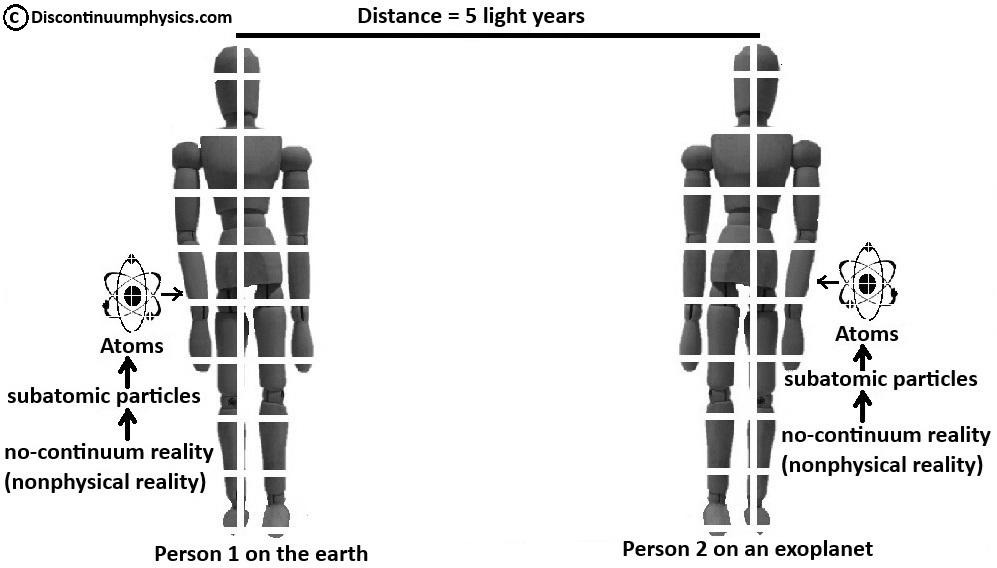
FIG 3:25 Person 1 and Person 2 are the “individuals” from the definition of telepathy. The white color represents the one DED-field. The gray color of the people represents the one EED-field. Together the white color and the gray color represent the DEF-field [25].
Using TOR (see Fig 1), no-continuum reality (nonphysical reality) is applicable to subatomic particles, which means no-continuum reality (nonphysical reality) is applicable to the subatomic particles of the bodies of Person 1 and Person 2 in Fig 3. Each of the subatomic particles of the “individuals” in the definition of telepathy, as depicted in Fig 3, is an EED-field that is part-of the one DED-field, which means those EED-fields are part-of each other by means of being part-of the one DED-field, which means there are no separate “individuals” in the definition of telepathy [25]. Also recall that (1) the two components of the DEF-field are the one EED-field and the one DED-field, and (2) the one EED-field and one DED-field are part-of each other, and (3) the dominate property of the DEF-field is inseparability: there are no separate things [13-15,25]. This means at the subatomic level two separate individuals do not exist — there are no separate things [25]. This means at the subatomic level, where no-continuum reality (nonphysical reality) is applicable, Person 1 and Person 2 are part-of each other, they are not separate individuals [25]. This means a “transfer” of information is not necessary because there is only one individual, which is expressed form the point of view of no-continuum reality (nonphysical reality) [25]. C-DCP provides the conceptual theoretical physics framework (CTP framework for telepathy) that extends physics to include telepathy as a natural phenomenon [25]. This CTP framework focuses (1) on the DEF-field and its property of inseparability, and (2) on TOR, with a focus on no-continuum reality (nonphysical reality) being applicable to subatomic particles [25]. This CTP framework of C-DCP is the “means” from the definition of telepathy that allows telepathy to occur as a natural phenomenon [25]. Since telepathy requires a reality other than the continuum reality (physical reality) without no-continuum reality (nonphysical reality) that is not fundamental and applicable inside a conscious mind, it is difficult for a human to experience telepathy, which is due to the talent of the human’s conscious mind for maintaining strict control of the five realities to keep the human in the 2SPCR position, which requires the continuum reality (physical reality) without no-continuum reality (nonphysical reality) that is not fundamental and applicable inside a conscious mind. Because it is difficult for a human to experience telepathy, it is difficult to experimentally detect telepathy [25].
IX. Conclusion
In 1954 Einstein wrote three letters in which he speculated physics must be a discontinuum physics, but he did not know how to proceed with such a theory [11]. From 2021 – 2025 twelve C-DCP (conceptual discontinuum physics) papers, based on Einstein’s three letters of 1954, established the conceptual foundations of DCP (discontinuum physics) [12-23]. Those twelve C-DCP papers contain “the CTP framework (conceptual theoretical physics framework) that allows the domain of physics to be (1) extended to include telepathy as a natural phenomenon, and (2) provide an explanation (aka the talent, [. . .]) for why humans have difficulty experiencing telepathy, which makes it difficult to experimentally detect telepathy” [25].
References
[1] The Nobel Prize in Physics 1921. NobelPrize.org. Nobel Prize Outreach 2025. Accessed Sat. 22 Nov 2025. https://www.nobelprize.org/prizes/physics/1921/summary/.
[2] Albert Einstein – Biographical. NobelPrize.org. Nobel Prize Outreach 2025. Accessed Sat. 22 Nov 2025. https://www.nobelprize.org/prizes/physics/1921/einstein/biographical/.
[3] A. Einstein, The Albert Einstein Collection Volume Two: Essays in Science, Letters to Solovine, and Letters on Wave Mechanics Kindle ed. (Philosophical Library/Open Road, 2019). p. 53.
[4] A. Einstein, Ann. Phys. 17, 891 (1905). (see “About This Document” on p.23 at https://users.physics.ox.ac.uk/~rtaylor/teaching/specrel.pdf.).
[5] A. Einstein, The Field Equations of Gravitation (Prussian Academy of Sciences Proceedings, 1915), part 4, pp. 844–847.
[6] A. Einstein, Relativity: The Special and General Theory (Crown Publishers, Inc., New York, 1961). pp. 1 – 57, and 59 – 104.
[7] A. Einstein and N. Rosen, Phys. Rev. 48, 73 (1935).
[8] M. Sachs, Phys. Essays 11, 330 (1998).
[9] Gamow, George. Thirty Years that Shook Physics: The Story of Quantum Theory Kindle ed. (Dover Publications, 1966). pp. 13 – 16.
[10] A. P. French, Einstein a Century Volume (Harvard University Press, Cambridge, MA, 1979). pp. 63, 150.
[11] J. Stachel, Einstein from ‘B’ to ‘Z’ (Birkhauser, 2002). pp. 141 – 154.
[12] E. Taylor, Physics Essays 34, 4 (2021). http://dx.doi.org/10.4006/0836-1398-34.4.578.
[13] E. Taylor and R. Iyer, Physics Essays 35, 1 (2022). http://dx.doi.org/10.4006/0836-1398-35.1.55.
[14] E. Taylor, Physics Essays 35, 3 (2022). http://dx.doi.org/10.4006/0836-1398-35.3.250.
[15] E. Taylor and R. Iyer, Physics Essays 35, 4 (2022). http://dx.doi.org/10.4006/0836-1398-35.4.395.
[16] E. Taylor and R. Iyer, Physics Essays 35, 4 (2022). http://dx.doi.org/10.4006/0836-1398-35.4.321.
[17] E. Taylor and R. Iyer, Physics Essays 36, 3 (2023). http://dx.doi.org/10.4006/0836-1398-35.4.265.
[18] E. Taylor and R. Iyer, Physics Essays 36, 4 (2023). http://dx.doi.org/10.4006/0836-1398-36.4.358.
[19] E. Taylor and R. Iyer, Physics Essays 36, 4 (2023). http://dx.doi.org/10.4006/0836-1398-36.4.416.
[20] E. Taylor and R. Iyer, Physics Essays 37, 1 (2024). http://dx.doi.org/10.4006/0836-1398-37.1.71.
[21] E. Taylor and R. Iyer, Physics Essays 37, 2 (2024). http://dx.doi.org/10.4006/0836-1398-37.2.165.
[22] E. Taylor and R. Iyer, Physics Essays 37, 4 (2024). http://dx.doi.org/10.4006/0836-1398-37.4.316.
[23] E. Taylor and R. Iyer, Physics Essays 38, 2 (2025). http://dx.doi.org/10.4006/0836-1398-38.2.114.
[24] A. Einstein and L. Infeld, Evolution of Physics: From Early Concepts to Relativity and Quanta (Simon and Schuster, New York, 1938), pp. 197–198.
[25] E. Taylor and R. Iyer, Physics Essays 38, 4 (2025). http://dx.doi.org/10.4006/0836-1398-38.4.344. [26] C. Watt, Parapsychology: A Beginner’s Guide, Kindle ed. (Oneworld Publications, London, 2016), p. 233.
AI Generated Summary of Telepathy as a Natural Phenomenon
🧠 Part 1 Summary — “Telepathy is a Natural Phenomenon”
🌍 Core Idea
The opening section establishes a historical and philosophical foundation: Einstein believed in an external physical reality grounded in the continuum—a spacetime that is infinitely divisible. But near the end of his life, he concluded that this entire framework might be wrong and that physics must shift to a discontinuum model. The author positions modern “Discontinuum Physics” (DCP) as the continuation of Einstein’s final, unfinished direction.
🔑 Key Points
1. Einstein’s Foundational Beliefs
- Einstein held that an external world exists independently of human perception.
- His theories of Special Relativity (SR) and General Relativity (GR) rely on the continuum concept—spacetime as infinitely divisible.
- SR: real time dilation and length contraction; flat spacetime.
- GR: gravity as curvature of spacetime.
2. The Problem: Two Incompatible Theories
- From 1900–1930, quantum mechanics emerged.
- Physics split into:
- Relativity for macroscopic phenomena
- Quantum theory for microscopic phenomena
- Einstein and Rosen tried (1935) to unify them using GR but failed.
- Einstein rejected quantum mechanics as incomplete.
3. Einstein’s Final Shift (1954)
- In three letters written a year before his death, Einstein argued:
- Physics cannot be based on a continuum.
- Space, time, and differential calculus must be discarded as fundamental.
- A new discontinuum physics is required.
- He admitted he did not know how to construct such a theory.
4. Implications of Einstein’s Late View
Einstein was effectively saying:
- Relativity is not fundamental and must be replaced.
- Time dilation and length contraction must be shown to be apparent, not real.
- Spacetime must be replaced with a discontinuum structure.
- External physical reality itself must be redefined.
5. Modern Development (2021–2025)
- Sixty-six years after Einstein’s death, twelve peer‑reviewed papers were published in Physics Essays to establish the conceptual foundations of Discontinuum Physics (DCP).
- These papers claim to build directly on Einstein’s 1954 letters.
🧭 Continuity Notes
- The author is setting up a philosophical pivot: from continuum → discontinuum.
- Telepathy will likely be framed as a natural consequence of discontinuum reality.
- Expect the next sections to argue that phenomena dismissed under continuum physics become explainable under DCP.
⚡ Part 2 Summary — Replacing External Reality, SR, and GR
🧠 Core Idea
This section explains how the first four Conceptual Discontinuum Physics (C‑DCP) papers claim to replace key components of Einstein’s relativity and the traditional notion of an external physical reality. The replacement framework centers on a new construct: the Discontinuous Energy Fields field (DEF‑field), composed of two inseparable energy fields that arise from a zero‑energy vacuum state.
🔑 Key Points
1. Elements of Relativity Declared “Apparent”
C‑DCP Papers 1–4 assert:
- Time dilation and length contraction are apparent, not real.
- Spacetime is replaced entirely by a new structure: the DEF‑field.
This directly contradicts Einstein’s continuum‑based relativity.
2. The DEF‑field: Replacement for Spacetime
The DEF‑field is described as:
- Discontinuous (not infinitely divisible).
- Composed of two inseparable energy fields that are “part‑of” each other.
- Neither field can exist or cease to exist independently.
- The curvature of the DEF‑field is what produces gravity (analogous to GR’s curvature of spacetime).
This is the core structural innovation of DCP.
3. How the DEF‑field Is Derived
The construction of the DEF‑field uses:
- The Einstein–Rosen continuous field concept
- Einstein’s mass–energy relation
- Einstein’s mass–energy conservation law
- A balanced energy ledger method
This method requires a special vacuum state called:
Unlimited Disembodied Energy (UDE)
- A vacuum energy state with zero net total energy
- Serves as the “source” from which the two discontinuous fields emerge
4. The Two Components of the DEF‑field
The DEF‑field consists of:
A. EED‑field
Embodied‑Energy‑Discontinuous‑field
- Energy embodied in matter
- A physical energy field
B. DED‑field
Disembodied‑Energy‑Discontinuous‑field
- Energy not embodied in matter
- A nonphysical energy field
Both fields:
- Arise from a quantum fluctuation of the UDE
- Are inseparable and mutually dependent
- Form the fundamental structure replacing spacetime
5. Replacement of External Physical Reality
The traditional idea of a single external physical reality is replaced by the discovery of five realities (details in later sections).
This marks a philosophical shift from:
- One continuum‑based external world
to - Multiple discontinuum‑based realities
🧭 Continuity Notes
- The author is building a metaphysical architecture where “physical” and “nonphysical” energy fields coexist structurally.
- This dual‑field model is likely the bridge toward explaining telepathy as a natural interaction between embodied and disembodied energy fields.
- Expect the next section to elaborate on the “five realities” and how consciousness or information transfer fits into the DCP framework.
🌐 Part 3 Summary — Inseparability & The Five Realities
🧠 Core Idea
This section establishes the absolute inseparability of the two energy fields (EED and DED) and uses that inseparability to define a system of five realities, two of which are fundamentally intertwined. This is the philosophical backbone of DCP: nothing exists independently, and “physical” and “nonphysical” are not separate domains but mutually embedded aspects of one discontinuum.
🔑 Key Points
1. Everything Is Part of One of Two Fields
According to DCP:
- Everything that exists is either:
- An EED‑field (embodied‑energy‑discontinuous‑field) that is part‑of one DED‑field,
→ therefore all EED‑fields are part‑of each other. - A DED‑field (disembodied‑energy‑discontinuous‑field) that is part‑of one EED‑field,
→ therefore all DED‑fields are part‑of each other.
This creates:
- One unified EED‑field
- One unified DED‑field
- Both are part‑of each other, forming the DEF‑field.
Result:
There are no separate things.
The dominant property of the DEF‑field is inseparability.
2. The Five Realities
While building DCP, the author identifies five distinct “realities”:
(1) Mathematical Reality
- Not fundamental
- Abstract, symbolic
(2) No‑Reality
- Fundamental
- Represented by UDE (unlimited disembodied energy)
- A zero‑net‑energy vacuum state
(3) No‑Continuum Reality (Nonphysical Reality)
- Represented by the DED‑field
- Not fundamental if used alone
- Nonphysical domain
(4) Continuum Reality (Physical Reality)
- Represented by the EED‑field
- Not fundamental if used alone
- Physical domain
(5) Discontinuum Reality (Quantized Reality) — Fundamental
This is the true foundational reality, composed of two inseparable parts:
5a. Limited No‑Continuum Reality
- Nonphysical
- DED‑field as part‑of the EED‑field
5b. Limited Continuum Reality
- Physical
- EED‑field as part‑of the DED‑field
This dual structure is the heart of DCP.
3. The Two Fundamental Realities Are Inseparable
Because:
- The DED‑field = nonphysical reality
- The EED‑field = physical reality
- And both are inseparable components of the DEF‑field
It follows that:
- Nonphysical reality is part‑of physical reality, and
- Physical reality is part‑of nonphysical reality
This is the DCP claim that the two domains humans treat as separate are actually mutually embedded and co‑dependent.
🧭 Continuity Notes
- This section establishes the metaphysical scaffolding needed to argue that information can move between “physical” and “nonphysical” domains.
- Telepathy will likely be framed as a natural interaction across inseparable realities, not a paranormal anomaly.
- Expect the next section to begin applying this structure to consciousness, perception, or information transfer.
🧩 Part 4 Summary — The Table of Realities (TOR)
🌐 Core Idea
This section introduces the Table of Realities (TOR)—a structured framework used in DCP to organize the five realities, track which are fundamental vs. non‑fundamental, and make predictions. TOR evolves across three sets of C‑DCP papers, with each group producing a new version.
🔑 Key Points
1. TOR Across the 12 C‑DCP Papers
- Version 1 → Papers 1–4
- Version 2 → Papers 5–8
- Version 3 → Papers 9–12
- TOR is used as a predictive tool.
TOR is pronounced like the name Tor.
2. Why TOR Requires Two Locations
Two of the five realities are non‑fundamental because they rely on the continuum concept:
- Mathematical reality
- Continuum reality (physical reality) used without nonphysical reality
The other three realities are fundamental because they are discontinuum‑based:
- No‑reality (UDE)
- No‑continuum reality (nonphysical) used with continuum reality
- Discontinuum reality (quantized reality)
To arrange these properly, TOR uses two locations:
- Inside the conscious mind (nonphysical)
- Outside the conscious mind (physical)
This dual‑location structure allows the five realities to be placed in a predictive matrix.
3. The 2SPCR Position
The author argues that humans evolved (or were created) to a specific survival plateau:
2SPCR = Survival Proficiency by Sense Perception of Continuum Reality
- Humans detect physical reality without nonphysical reality using the senses.
- This is sufficient for survival (finding food, water, avoiding danger).
- Evolution/creation stopped at this plateau because it was “good enough.”
- Thus, humans naturally perceive only the non‑fundamental continuum reality, not the deeper discontinuum structure.
This sets up the later argument that telepathy involves accessing realities beyond the 2SPCR limit.
4. How TOR Is Structured
TOR is divided into three columns:
Column 1 — Non‑Fundamental Realities
- Mathematical reality
- Continuum reality (physical reality) used without nonphysical reality
Column 2 — Entities & Cosmogenesis
- Lists entities to which realities apply:
UDE → subatomic particles → humans → galaxies - Also contains the cosmogenesis sequence from C‑DCP Paper 12:
- UDE emerges from the “2‑negate state”
- Quantum mechanics converts UDE into the quantum vacuum state with zero net total energy (QVS‑znte)
- A quantum fluctuation creates a discontinuity
- The discontinuity is conserved as EM‑radiation discontinuity
- The universe emerges from this conserved discontinuity
Column 3 — Fundamental Realities
- No‑reality (UDE)
- No‑continuum reality used with continuum reality
- Discontinuum reality (quantized reality)
TOR is also divided into sections (0 through 9), each corresponding to stages of cosmogenesis or domains of reality.
5. TOR Has Two Directions
Going Down Column 2
- Entities increase in size (subatomic → human → galaxy)
- Limited continuum reality (physical component) becomes dominant
Going Up Column 2
- Entities decrease in size
- Limited no‑continuum reality (nonphysical component) becomes dominant
A key threshold:
- 0.1 mm is chosen as the dividing line between microscopic and macroscopic realms.
- At the discontinuum length (DL)—unknown—the nonphysical component becomes so dominant that it is referred to simply as “no‑continuum reality,” though technically it remains inseparable from continuum reality.
🧭 Continuity Notes
- TOR is the operational tool that ties the five realities to actual predictions.
- The inseparability of physical and nonphysical realities is now mapped onto a structured table that spans from vacuum energy to galaxies.
- The next section will begin applying TOR to consciousness, perception, or telepathy.
🧬 Part 5 Summary — Humans as Multi‑Reality Organisms & Control of the Five Realities
🌐 Core Idea
Using TOR, the author argues that a human being—with a brain (physical) and a conscious mind (nonphysical)—is a multi‑reality organism to which all five realities apply simultaneously. The conscious mind actively “controls” which realities are accessible during waking life, keeping humans locked into the 2SPCR survival mode. This control mechanism is presented as the reason telepathy is difficult to experience or detect.
🔑 Key Points
1. A Human Engages All Five Realities
By locating “Human” in Column 2 of TOR and cross‑referencing Columns 1 and 3:
Inside the Conscious Mind (Column 1)
Applicable realities:
- Mathematical reality
- Continuum reality (physical reality) without nonphysical reality
→ This is not fundamental
→ This is what Einstein mistakenly called “external physical reality”
→ According to DCP, it exists only inside the conscious mind, not outside it
Whole Human (Column 3)
Applicable realities:
- Discontinuum reality (quantized reality)
→ With the limited continuum reality component dominant
→ This applies to the entire physical organism
Atoms (Column 3)
- Governed by discontinuum reality
- With limited no‑continuum reality (nonphysical component) dominant
Subatomic Particles (Column 3, near DL)
- Close to the discontinuum length (DL)
- Dominated by no‑continuum reality (nonphysical reality)
- Though still inseparable from continuum reality
Result
A human is simultaneously:
- Physical (EED‑field)
- Nonphysical (DED‑field)
- Emergent from UDE
- Operating across all five realities
- Structured by inseparable physical + nonphysical components
This is why the figure uses:
- Gray → EED‑field (physical)
- White → DED‑field (nonphysical)
2. Einstein’s “External Physical Reality” Reinterpreted
The paper claims:
- Einstein’s “external physical reality” is actually continuum reality without nonphysical reality
- This is not fundamental
- And it exists only inside the conscious mind, not outside it
This is a major philosophical inversion: what humans think is “out there” is, in this model, a perceptual construct inside the mind.
🧠 3. How Humans Control the Five Realities
The author argues that:
The conscious mind actively regulates which realities are accessible.
- While awake, the conscious mind keeps the human locked into the Survival Proficiency Sense Perception Continuum Reality or 2SPCR position. This position is described as including the following attributes:
- Survival proficiency
- Sense perception
- Access only to Continuum Reality without nonphysical reality
- This ensures humans can find food, water, avoid danger
- This “control” is described as a talent evolved (or created) for survival
Implication for Telepathy
Because telepathy would require access to realities other than continuum reality without nonphysical reality (our physical waking life):
- The conscious mind’s strict control makes telepathy:
- Difficult to experience
- Difficult to detect experimentally
- Difficult to reproduce in laboratory conditions
This sets up the paper’s central claim:
Telepathy is natural, but humans are neurologically and perceptually locked out of it.
🧭 Continuity Notes
- This bridges cosmology → cognition → perception.
- The next will likely argue how telepathy fits into the DCP framework, possibly by showing how information can move through the DED‑field or discontinuum reality.
- Expect a shift toward mechanisms of communication across inseparable realities.
🔮 Part 6 Summary — Telepathy as a Natural Phenomenon
🌐 Core Idea
The thirteenth C‑DCP paper (accepted Oct 20, 2025) argues that telepathy is a natural consequence of discontinuum physics. The standard definition of telepathy—“transfer of information between individuals by means other than the known senses”—is reinterpreted through the lens of the five realities and TOR.
The key claim:
Telepathy operates through no‑continuum reality (nonphysical reality), not through the continuum reality that humans normally perceive.
🔑 Key Points
1. The Standard Definition of Telepathy Involves Two Realities
The definition has two parts:
A. “Transfer of information between individuals”
- Requires separability
- Separability only exists in continuum reality (physical reality) without nonphysical reality
- This reality is not fundamental and exists only inside the conscious mind
B. “By means other than the known senses”
- Cannot be based on continuum reality
- Because continuum reality is the domain of the senses (2SPCR position)
- And the conscious mind strips away fundamental realities to maintain survival proficiency
Conclusion
The second part of the definition must be based on:
- No‑continuum reality (nonphysical reality)
- Specifically Section 3 of TOR, where nonphysical reality dominates near the discontinuum length
This is the first formal claim in the paper that telepathy is a nonphysical‑reality phenomenon.
2. Why Humans Don’t Normally Experience Telepathy
The paper ties this to the “talent” described earlier:
The Conscious Mind’s Protective Function
- Keeps humans locked into the 2SPCR position
- Filters perception so humans only experience:
- Continuum reality
- Without nonphysical reality
- Which is not fundamental
- This ensures survival (finding food, water, avoiding danger)
Implication
Because telepathy requires access to no‑continuum reality, and the conscious mind actively suppresses that reality:
- Telepathy becomes difficult to experience
- Difficult to detect experimentally
- Difficult to reproduce in laboratory conditions
This is the paper’s explanation for why telepathy appears elusive despite being “natural.”
3. The Example: Person 1 and Person 2
The paper uses a thought experiment:
- Person 1 on Earth
- Person 2 on an exoplanet 5 light‑years away
- Both are described from the perspective of continuum reality
- Both are made of atoms → subatomic particles → discontinuum reality
- But telepathic interaction between them would occur through no‑continuum reality, not through physical space
This sets up the idea that telepathy is not limited by distance, because nonphysical reality is not spatially separable.
4. The CTP Framework
The author claims that the 12 C‑DCP papers (2021–2025) provide a Conceptual Theoretical Physics (CTP) framework that:
- Extends physics to include telepathy as a natural phenomenon
- Explains why humans rarely experience telepathy
- Explains why telepathy is hard to detect experimentally
This is presented as the fulfillment of Einstein’s 1954 speculation that physics must become a discontinuum physics.
🌐 THE FIVE REALITIES — A VISUAL MAP
Below is a clean, layered map showing how each reality sits, relates, and interlocks.
Think of it as a vertical stack with a horizontal dual‑structure, because DCP is both hierarchical and inseparable.
🜂 LEVEL 0 — THE SOURCE LAYER
0. No‑Reality (UDE)
Fundamental
- Unlimited Disembodied Energy
- Zero‑net‑energy vacuum
- The “ground” from which the two discontinuous fields emerge
- Not physical, not nonphysical — pre‑categorical
Symbol: The uncarved block, the void‑substrate.
🜁 LEVEL 1 — THE TWO DISCONTINUOUS FIELDS
These are inseparable and mutually embedded.
1A. DED‑Field (No‑Continuum Reality)
Nonphysical
- Disembodied energy
- Not fundamental alone
- Becomes fundamental when paired with EED
- Dominant near the discontinuum length (DL)
1B. EED‑Field (Continuum Reality)
Physical
- Embodied energy
- Not fundamental alone
- Dominant at macroscopic scales (above ~0.1 mm)
Symbol:
DED = white field
EED = gray field
Together = DEF‑field (the replacement for spacetime)
🜄 LEVEL 2 — THE FUSED REALITY
2. Discontinuum Reality (Quantized Reality)
Fundamental
- The inseparable fusion of DED + EED
- Has two “dominance modes”:
- Limited no‑continuum reality (nonphysical‑dominant)
- Limited continuum reality (physical‑dominant)
- Governs atoms, subatomic particles, and the whole human organism
Symbol: The braid — two strands, one reality.
🜃 LEVEL 3 — THE NON‑FUNDAMENTAL HUMAN‑PERCEPTION LAYER
These exist only inside the conscious mind.
3A. Mathematical Reality
Not fundamental
- Symbolic, abstract
- Exists only as mental constructs
3B. Continuum Reality Without Nonphysical Reality
Not fundamental
- The “external physical world” humans think they see
- Actually a perceptual construct inside the conscious mind
- The 2SPCR survival mode
- What Einstein mistakenly believed was external
Symbol: The sensory shell — the filtered world.

